
Leadership & Organizational Transformation
Fostering Communication and Conflict Resolution Strategies in the Neurodiverse Workplace
By Kim Kewney
Founder & Executive Director · The Mindset Matrix Institute™
Originally published January 2025 · 10-minute read
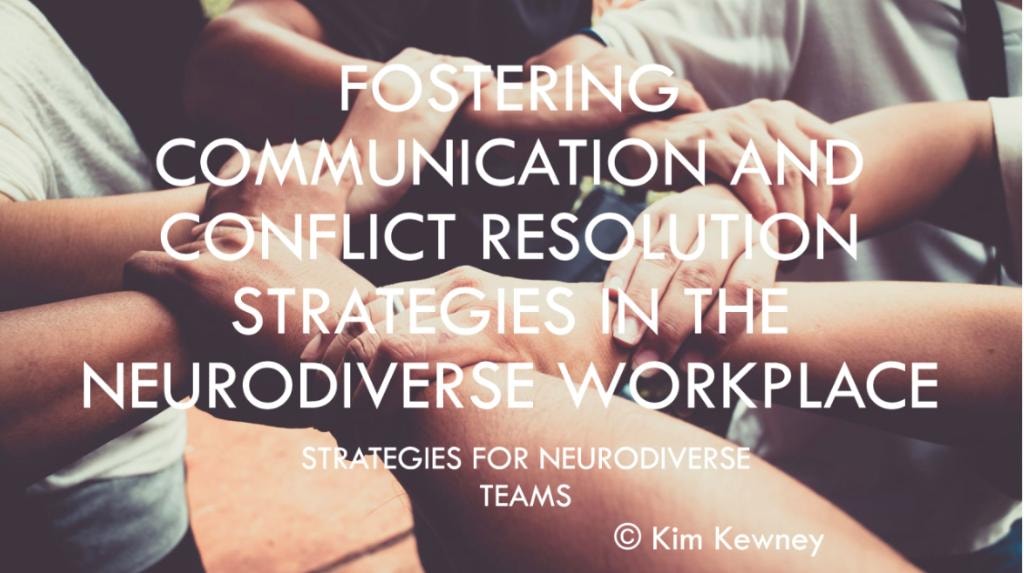
Publication Note: This article was originally published in January 2025been reformatted for publication by The Mindset Matrix Institute™. The original content has not been substantively altered.
Workplaces are becoming increasingly diverse — not only in terms of race, gender, and cultural background, but also in terms of neurological profile. Neurodiversity refers to the natural variation in human brain function and behavioral traits, and it encompasses conditions such as ADHD, autism spectrum disorder (ASD), dyslexia, dyspraxia, dyscalculia, Tourette syndrome, and others.
Neurodiverse individuals bring significant strengths to the workplace — including creativity, pattern recognition, hyperfocus, attention to detail, and innovative thinking. At the same time, they may face challenges related to communication, sensory processing, executive function, and navigating social norms that were designed with neurotypical individuals in mind.
This article is designed to help individuals, leaders, and organizations foster more effective communication and conflict resolution in neurodiverse workplaces. It draws on evidence-informed practices from neuroscience, organizational psychology, and inclusive leadership to offer practical strategies that support everyone — not just neurodiverse employees.
Why It Matters
The business case for neurodiversity is well established. Research consistently shows that neurodiverse teams outperform neurotypical teams on tasks requiring innovation, problem-solving, and pattern recognition. Companies that actively recruit and support neurodiverse employees report higher levels of creativity, productivity, and employee engagement.
Yet despite these benefits, neurodiverse individuals continue to face significant barriers in the workplace. Studies suggest that unemployment and underemployment rates among neurodiverse adults are disproportionately high — not because of a lack of skill or capability, but because of workplace cultures, communication norms, and management practices that fail to accommodate neurological difference.
Conflict is one of the most significant barriers. When communication styles, sensory needs, and social expectations differ, misunderstandings multiply. Unresolved conflict erodes trust, damages relationships, and drives talented people out of organizations. Learning to navigate conflict effectively in neurodiverse workplaces is not simply a matter of fairness — it is a strategic imperative.
Warm-Up Questions
Before reading further, take a moment to reflect:
- 1.What does "effective communication" look like in your current workplace? Who does it serve well — and who might it leave behind?
- 2.Have you ever experienced or witnessed a workplace conflict that seemed to stem from a difference in communication style rather than a genuine disagreement?
- 3.How does your organization currently support employees with different neurological profiles? What more could be done?
- 4.What assumptions do you hold about how people "should" communicate at work? Where did those assumptions come from?
Understanding Neurodiversity
Neurodiversity is not a deficit model. It is a framework that recognizes neurological variation as a natural and valuable aspect of human diversity — one that should be understood, accommodated, and celebrated rather than pathologized or suppressed.
Common neurodiverse profiles include:
- ADHD (Attention Deficit Hyperactivity Disorder) — characterized by challenges with attention regulation, impulse control, and executive function, alongside strengths in creativity, hyperfocus, and divergent thinking.
- Autism Spectrum Disorder (ASD) — characterized by differences in social communication, sensory processing, and pattern recognition, alongside strengths in analytical thinking, attention to detail, and systematic problem-solving.
- Dyslexia — characterized by challenges with reading and phonological processing, alongside strengths in spatial reasoning, big-picture thinking, and creative problem-solving.
- Dyspraxia — characterized by challenges with motor coordination and spatial awareness, alongside strengths in verbal communication and creative thinking.
- Dyscalculia — characterized by challenges with numerical processing and mathematical reasoning.
- Tourette Syndrome — characterized by involuntary motor and vocal tics, often accompanied by strengths in creativity and hyperfocus.
It is important to note that neurodiversity exists on a spectrum. No two neurodiverse individuals are alike, and the challenges and strengths associated with any given profile will vary significantly from person to person. Effective support requires individualized understanding — not a one-size-fits-all approach.
Communication Norms and Their Impact
Most workplace communication norms were designed by and for neurotypical individuals. They assume a shared understanding of social cues, an ability to process verbal information quickly, a comfort with ambiguity, and a capacity to navigate unwritten social rules with ease.
For neurodiverse individuals, these assumptions can create significant barriers. Common challenges include:
- Difficulty interpreting tone, sarcasm, or implied meaning in verbal communication.
- Challenges with eye contact, turn-taking, or other nonverbal communication conventions.
- Sensory overload in noisy, crowded, or visually stimulating environments.
- Difficulty processing verbal instructions quickly, particularly in fast-paced meetings.
- Challenges with open-ended or ambiguous communication — a preference for clear, specific, and direct language.
- Difficulty masking or suppressing neurological differences in professional settings — a process known as "camouflaging" that is cognitively exhausting and psychologically harmful over time.
These challenges are not character flaws or professional deficiencies. They are neurological differences that can be accommodated with relatively simple adjustments to communication practices, workplace environments, and management approaches.
Workplace Challenges
Neurodiverse individuals face a range of workplace challenges that can contribute to conflict, misunderstanding, and disengagement. These include:
Disclosure and Stigma
Many neurodiverse individuals choose not to disclose their neurological profile at work for fear of stigma, discrimination, or being perceived as less capable. This means that managers and colleagues may not understand why a person communicates or behaves differently — leading to misinterpretation, frustration, and conflict.
Accommodation Gaps
Even when neurodiverse individuals do disclose, they may not receive adequate accommodations. Many organizations lack the knowledge, resources, or willingness to implement meaningful adjustments — leaving neurodiverse employees to manage their differences without support.
Performance Management
Traditional performance management systems often measure outputs in ways that disadvantage neurodiverse employees — prioritizing speed over accuracy, verbal communication over written, or social conformity over independent contribution. When neurodiverse employees are evaluated against neurotypical norms, they are frequently undervalued and misunderstood.
Social Isolation
Neurodiverse individuals may struggle to build informal workplace relationships, navigate office politics, or participate in social rituals that neurotypical colleagues take for granted. Social isolation increases vulnerability to conflict and reduces access to the informal support networks that help people navigate workplace challenges.
Practical Communication Strategies
The following strategies are designed to improve communication in neurodiverse workplaces. They are beneficial for all employees — not just those with neurodiverse profiles.
Be Direct and Specific
Avoid vague, ambiguous, or implied communication. State expectations, instructions, and feedback clearly and specifically. When in doubt, write it down.
Use Multiple Communication Channels
Not everyone processes verbal information equally well. Follow up verbal conversations with written summaries. Provide meeting agendas in advance. Offer information in multiple formats — written, visual, and verbal.
Allow Processing Time
Some neurodiverse individuals need more time to process information and formulate responses. Avoid putting people on the spot in meetings. Allow time for reflection before expecting a response.
Create Sensory-Friendly Environments
Reduce unnecessary sensory stimulation in shared workspaces. Provide quiet areas for focused work. Allow the use of noise-cancelling headphones, sunglasses, or other sensory tools without stigma.
Normalize Accommodation Requests
Create a culture where requesting accommodations is seen as a professional and reasonable act — not a sign of weakness or inability. Make the accommodation process simple, confidential, and responsive.
Avoid Assumptions About Intent
When a colleague's communication style seems unusual, blunt, or socially unconventional, resist the urge to interpret it as rudeness, hostility, or indifference. Seek clarification before drawing conclusions.
Collaborative Conflict Resolution Strategies
Conflict resolution in neurodiverse workplaces requires a thoughtful, structured approach that accounts for differences in communication style, sensory sensitivity, and emotional regulation. The following strategies provide a framework for navigating conflict collaboratively and constructively.
Pause Before Responding
When conflict arises, resist the urge to respond immediately. Take time to regulate your emotional response before engaging. This is particularly important for individuals with ADHD or autism, who may experience heightened emotional reactivity in conflict situations.
Choose the Right Environment
Select a quiet, private, and sensory-friendly environment for conflict resolution conversations. Avoid noisy, crowded, or overstimulating spaces. Allow the other person to choose a location where they feel comfortable.
Use Structured Communication
Provide a clear agenda for the conversation. Use direct, specific language. Avoid sarcasm, metaphor, or implied meaning. Summarize key points in writing after the conversation.
Focus on Behavior, Not Character
Address specific behaviors and their impact rather than making judgments about the other person's character or intentions. Use "I" statements to describe your own experience without attributing blame.
Seek to Understand
Before presenting your own perspective, make a genuine effort to understand the other person's experience. Ask open-ended questions. Listen without interrupting. Acknowledge what you have heard before responding.
Agree on Concrete Next Steps
Conflict resolution is not complete until both parties have agreed on specific, concrete actions going forward. Document these agreements in writing. Follow up to ensure they are implemented.
Psychological Safety
Psychological safety — the belief that one can speak up, ask questions, make mistakes, and be oneself without fear of punishment or humiliation — is the foundation of effective communication and conflict resolution in any workplace. It is especially critical in neurodiverse workplaces.
Research by Amy Edmondson at Harvard Business School has consistently demonstrated that psychological safety is the single most important factor in team performance. Teams with high psychological safety are more innovative, more productive, and better at learning from mistakes than teams with low psychological safety.
For neurodiverse individuals, psychological safety means:
- Being able to disclose a neurological difference without fear of stigma or discrimination.
- Being able to request accommodations without being perceived as less capable or committed.
- Being able to communicate in ways that feel natural and authentic — without having to mask or suppress neurological differences.
- Being able to raise concerns, ask questions, and challenge assumptions without fear of retaliation.
- Being valued for their contributions rather than judged for their differences.
Building psychological safety requires consistent, intentional effort from leaders at every level of the organization. It cannot be mandated — it must be modeled, nurtured, and protected over time.
Building an Inclusive Workplace Culture
Inclusive workplace cultures do not happen by accident. They are built through deliberate policy, consistent practice, and ongoing learning. The following organizational strategies support the development of genuinely inclusive neurodiverse workplaces.
Leadership Commitment
Inclusion begins at the top. Leaders must visibly and consistently champion neurodiversity — not as a compliance exercise, but as a genuine organizational value. This means speaking openly about neurodiversity, modeling inclusive communication practices, and holding others accountable for doing the same.
Education and Awareness
Many workplace conflicts involving neurodiverse individuals stem from ignorance rather than malice. Investing in neurodiversity education — for all employees, not just managers — reduces stigma, builds empathy, and equips people with the knowledge they need to communicate and collaborate more effectively.
Flexible Work Practices
Flexibility in how, when, and where work is done benefits neurodiverse employees disproportionately — but it benefits everyone. Remote work, flexible hours, asynchronous communication, and output-based performance management all reduce the barriers that neurodiverse individuals face in traditional workplace settings.
Structured Onboarding and Mentoring
Neurodiverse individuals often struggle with the unwritten rules of workplace culture — the informal norms, social rituals, and political dynamics that neurotypical employees navigate intuitively. Structured onboarding programs and dedicated mentoring relationships provide explicit guidance that reduces confusion, builds confidence, and accelerates integration.
Clear and Consistent Processes
Ambiguity is the enemy of inclusion. Clear, consistent, and well-documented processes for communication, performance management, accommodation requests, and conflict resolution reduce the cognitive load on neurodiverse employees and ensure that everyone is working from the same set of expectations.
Role-Playing Scenarios
The following scenarios are designed to help individuals and teams practice the communication and conflict resolution strategies described in this article. Use them in training sessions, coaching conversations, or personal reflection.
- 1.A team member with ADHD frequently interrupts colleagues during meetings. Other team members are frustrated. How would you address this as a manager? How would you address it as a colleague?
- 2.An autistic employee sends emails that colleagues perceive as blunt or rude. The employee is unaware of the impact. How would you raise this with the employee in a way that is respectful and constructive?
- 3.A dyslexic employee is struggling with a new documentation system that requires extensive written communication. They have not disclosed their dyslexia. How might you create an environment where they feel safe to do so?
- 4.Two team members — one neurotypical, one neurodiverse — are in conflict over a project. The neurotypical employee feels the neurodiverse colleague is being difficult and uncooperative. The neurodiverse employee feels misunderstood and unsupported. How would you mediate this conflict?
- 5.A neurodiverse employee is consistently underperforming on tasks that require rapid verbal communication in meetings, but excels at independent analytical work. How would you restructure their role to leverage their strengths?
Key Takeaways
- Neurodiversity is a natural and valuable aspect of human variation — not a deficit to be corrected.
- Most workplace communication norms were designed for neurotypical individuals and may create significant barriers for neurodiverse employees.
- Effective communication in neurodiverse workplaces requires directness, clarity, flexibility, and a willingness to accommodate different communication styles.
- Conflict resolution in neurodiverse workplaces requires a structured, patient, and psychologically safe approach.
- Psychological safety is the foundation of effective communication and conflict resolution — and it must be actively built and protected.
- Inclusive workplace cultures are built through deliberate policy, consistent practice, and ongoing learning — not through good intentions alone.
- The strategies that support neurodiverse employees benefit everyone.
Reflection Questions
For Individuals
- How has your own neurological profile — whether neurotypical or neurodiverse — shaped your communication style and your experience of workplace conflict?
- Are there communication practices in your current workplace that you find challenging? What adjustments would help?
- How comfortable are you advocating for your own needs at work? What gets in the way?
For Leaders and Managers
- How well does your team's current communication culture serve neurodiverse members? What evidence do you have for your answer?
- What specific changes could you make to your communication practices, meeting structures, or performance management approach to better support neurodiverse employees?
- How psychologically safe does your team feel? How do you know?
- What would it look like to actively champion neurodiversity in your organization — not just accommodate it?
For Organizations
- Does your organization have a clear, accessible, and well-communicated policy on neurodiversity and workplace accommodations?
- How does your organization currently measure and track the inclusion of neurodiverse employees? What gaps exist in your data?
- What investment is your organization making in neurodiversity education and awareness? Is it sufficient?
- How does your organization handle conflict involving neurodiverse employees? Are your conflict resolution processes equitable and accessible?
Resources
Suggested Reading
- Neurotribes: The Legacy of Autism and the Future of Neurodiversity — Steve Silberman
- Divergent Mind: Thriving in a World That Wasn't Designed for You — Jenara Nerenberg
- The Power of Neurodiversity — Thomas Armstrong
- Nonviolent Communication: A Language of Life — Marshall B. Rosenberg
- The Fearless Organization: Creating Psychological Safety in the Workplace for Learning, Innovation, and Growth — Amy C. Edmondson
- Crucial Conversations: Tools for Talking When Stakes Are High — Kerry Patterson, Joseph Grenny, Ron McMillan, Al Switzler
Further Resources
- CHADD (Children and Adults with ADHD) — chadd.org
- Autism Society of America — autism-society.org
- ASAN (Autistic Self Advocacy Network) — autisticadvocacy.org
- International Dyslexia Association — dyslexiaida.org
- Job Accommodation Network (JAN) — askjan.org
- Understood.org — workplace resources for neurodiverse employees
- ADA National Network — adata.org
- EEOC (Equal Employment Opportunity Commission) — eeoc.gov
Conclusion
Neurodiverse workplaces are not simply workplaces that include neurodiverse employees. They are workplaces that have been intentionally designed to support the full range of human neurological variation — through their communication practices, their physical environments, their management approaches, their performance systems, and their organizational cultures.
Building such workplaces requires effort, investment, and a genuine commitment to inclusion. It requires leaders who are willing to examine their own assumptions, challenge existing norms, and model the behaviors they want to see. It requires organizations that are willing to invest in education, accommodation, and systemic change.
But the return on that investment is significant. Neurodiverse workplaces are more innovative, more productive, and more resilient than workplaces that exclude or marginalize neurological difference. They attract and retain talented people who might otherwise be lost to organizations that are unwilling to accommodate their needs. And they create cultures of psychological safety and genuine inclusion that benefit everyone — not just neurodiverse employees.
The work of building neurodiverse workplaces is not finished when a policy is written or a training program is delivered. It is ongoing, iterative, and deeply human. It requires patience, humility, and a willingness to keep learning.
But it is work worth doing. Because when we create workplaces where everyone can contribute, be heard, and thrive — we create workplaces that are better for everyone.
© 2025 Kim Kewney / The Mindset Matrix Institute™. All rights reserved. Originally published January 7, 2025. This article may not be reproduced, distributed, or transmitted in any form without prior written permission.
About the Author

Kim Kewney
Founder & Executive Director · The Mindset Matrix Institute™
Kim Kewney is the Founder of The Mindset Matrix Institute™, where she works with individuals, families, leaders, educators, and organizations to create meaningful, lasting change through an evidence-informed approach to human development. Her work integrates neuroscience, leadership, emotional intelligence, and organizational transformation into one cohesive framework.
Meet The Founder →Continue Exploring
More from The Knowledge Library
Explore additional publications from The Mindset Matrix Institute™.
← Return to Knowledge Library